Another Hearing, Not Mine

I was arrested more than two years ago, thus have experienced multiple hearings, some in person, some online, depending on Covid conditions. This morning was one more, not mine, but for two friends, codefendants brought back to court for breaking bail conditions. I’m drawn to write as an basically good American citizen with a fair degree of faith in our court system. I recognize the privilege I have within this system, especially as a white person, yet now recognize some aspects of it that are new to me and very disappointing.

My purse mints

But back to today’s hearing. I would not have known about it, except that I participated in a demonstration a week ago, marching around the State House, calling for the right to drivers’ licenses for immigrants who are not yet citizens. Though I had taken the train into Boston by myself, there were hundreds of us there and I encountered a friend, Olivia, who I knew from previous protests. She told me about this hearing planned for today and I wanted to be there, for support. Coincidentally, at another climate protest on Wednesday, as I talked with another protester, new to me, I learned that he was Olivia’s dad! Small world, this activist world.

Back to today’s hearing. As we’ve experienced hearings during the past two and a half years, I have been fully appreciative when supporters have shown up to lend their emotional reinforcement to those of us under arrest and at court. Today’s defendants were arrested with me for trespassing at the coal-powered plant, and along with me, were released on bail, rather than being held in jail until our trial. An aside is how my bail was paid: a special fund maintained by New England Quakers paid my bail. As a Quaker, I had long known about this fund, never expecting that I would be a recipient! When I learned about their payment, I cried, feeling the fullness and the sweetness of their support for my actions.

Something I’d never been aware of is that when someone is out on bail, there are often other bail conditions that are part of the release, in addition to paying the bail money. For us, two additional conditions were that we would not return to the scene of our crime, the power plant, and that we would not take any further actions that would cause us to be arrested again.

I have been highly conscious of those conditions. Although I have been involved in dozens of other protests, I have very intentionally not risked arrest. It was one thing to spend an afternoon in jail; it would be another to spend days, months, or years there. Well, my two friends, who will remain unnamed, were not so cautious. I was actually with them and others during one of the protests when we stopped coal trains in the middle of a bitterly cold winter night. The difference between us was that I left, really just by chance, before I could be arrested again. My two friends lingered and were arrested.

So, once again, back to today’s hearing. We’ve done this multiple times, so we have a routine. At one of our first hearings, two years ago on the Valentine’s Day before Covid, we agreed to wear red for that in-person court appearance. It was glorious to see the courtroom filled with red-wearing friends that day! It was the start of a tradition that day; the defendants and our supporters each wear red, for solidarity, whether in-person or online, for all of our hearings. I’m not a big shopper, however, I bought myself one new sweater this winter, a beautiful red one.

This morning, the hearing was online, not on Zoom, but on the Court’s WebEx system, which has additional security controls. Court was scheduled for nine am, so the defendants, their attorney, and we supporters gathered on Zoom forty minutes earlier, just us. It was wonderful to see these familiar faces again, almost all wearing red. We’ve been together so many times from all over New England, getting to know each other, starting with required training in non-violent actions, continuing with multiple actions, and have grown close. The defendants started with a few words, expressing their anxieties. Next, our fabulous attorney shared her expectations for the proceedings, then, we each got to say a few words about our own lives. There were about twenty of us there. Our attorney reminded us of something that shocked me when I first heard it: although it is illegal for us to lie to a police officer or in court, the court system and police officers can lie to us, in fact, are expected to, as a way of getting information from us.

So, at risk this morning was my friends’ freedom: this judge could send them back to jail to await their trial. Just before nine, we signed off of the zoom call and called into the Court’s system, muting ourselves, so as not to disturb the Court call. The hearing lasted about 45 minutes. When it ended, we called back into the support call for a debriefing. It’s difficult to describe the powerful sense of being together that we shared. Zoom has its limitations, but it can’t stop that powerful response. My friends, defendants at this hearing, were certainly more relaxed than during our call before the hearing. The result of the hearing was that the judge (who we all liked very much) gave them another chance. If they are arrested again, they may be kept in jail until their trial. There were no additional fines or penalties.

I loved listening to our attorney, her quiet, calm logic. The judge was also logical and calm. During the various hearings I have attended, either as a supporter or a defendant, I have been surprised to observe so clearly something about the personality of the judge. Of course, each judge has his or her own personality; no one is neutral. What has surprised me is that our judges have so clearly indicated their degree of understanding and support of our cause — decreasing the human causes of climate change. A separate issue is whether or not our actions have been legal. An earlier judge even stated that our actions may be moral, though not necessarily legal.

Boston Globe 2/8/22

Anyways, this judge sounded as if he is on our side, morally. The prosecuting attorney I didn’t care for so much. He didn’t sound logical to me, but I’m certainly not unbiased. What sticks in my head strongly is that police officers are taught to lie to us, are expected to lie to us to get the information they want.

My next hearing will likely be in March. The soonest possible date for the trial for me and my sixteen codefendants is June. These results of my activism have continued far longer than I expected.

Copyright © 2022
Electronic Decluttering

What am I talking about? I’m talking, all right, writing, about the various forms of electronic bombardment that most of us endure, enjoy, and/or utilize, the email, the texts, and the phone calls. Among all of it are a relatively small number of needed, useful communications. Most are advertisements, spam, useless, or, at best, simply unnecessary. This is the story of my personal battle in this particular decluttering challenge.

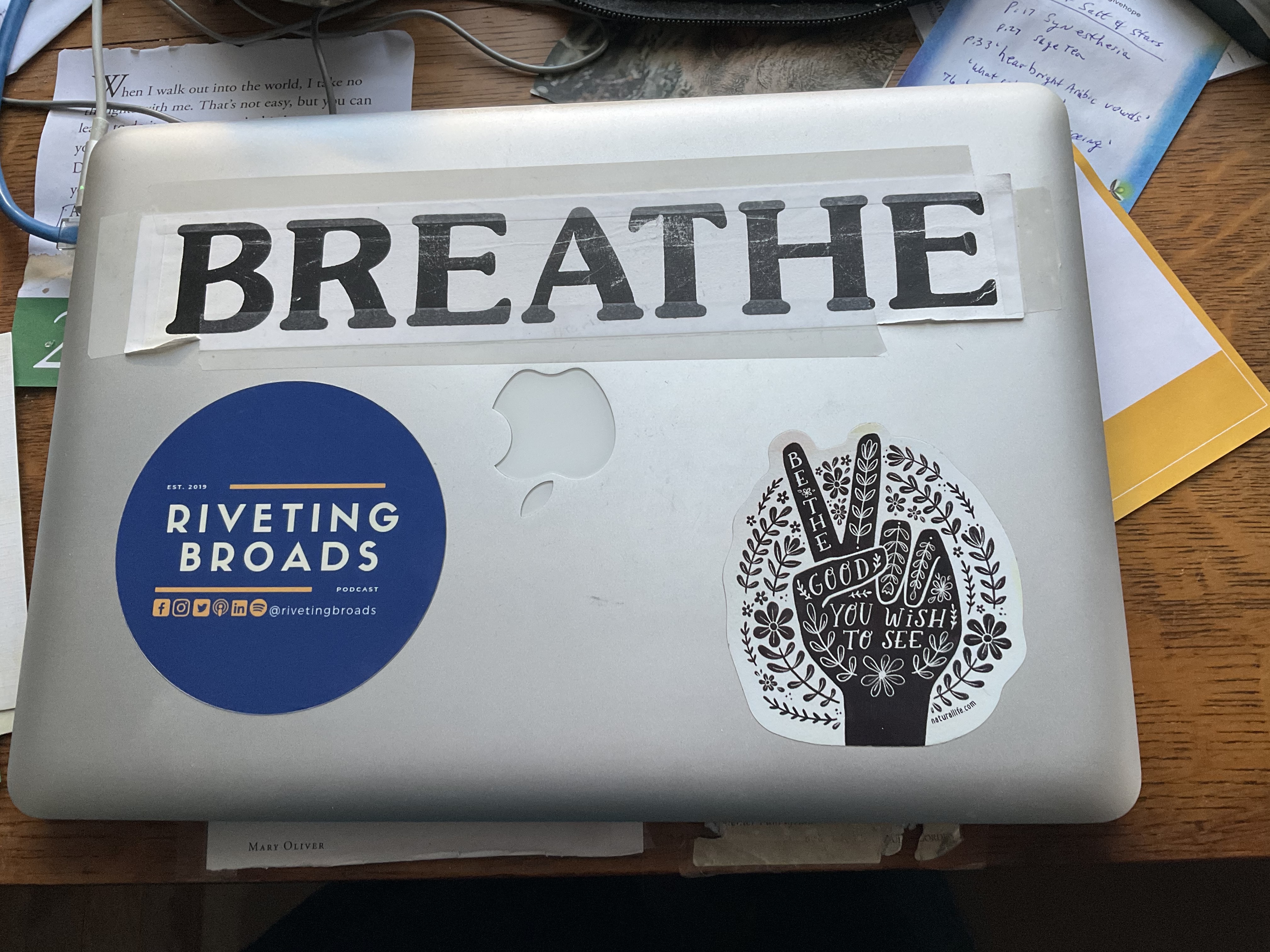
My computer, on my un-decluttered desk

The assignment is on decluttering, intended to be about attempts we have made to remove excess items, ‘things,’ from our homes. Most of us have attempted decluttering in the past, moving books or unwanted, usable clothing, kitchen accessories and more from us to others, via various middle-men, such as libraries, yard sales, used goods stores and more. That story for me would be many tales of failure, so I am not even going to begin. However, I do have another tale of decluttering, but instead of ‘thing’ decluttering, it will be about electronic decluttering.

First, I need to provide you with a bit of my relevant personal history. During another lifetime in an earlier century, in the 90’s, I was the national technology support manager for an international corporation. I was among those paid to be on top of the latest technology, always encouraging others to move to the newest technology platform, updating software and hardware. I loved my work and couldn’t believe that I was paid to work with the newest technology toys. Cell phones were not generally in use then. I carried a pager and was expected to be available whenever needed. That was then; this is now.

After I left that work, for a few years, I remained plugged in, connected to technology. I can’t pinpoint when that changed, but I continue to think of cell phones as useful for emergencies, not for everyday phone calls. My landline is my primary form of telephone communication and I only changed from a flip phone to a smartphone a month ago.

I dislike it when people interrupt an in-person conversation to answer their cell or even to check it, to see if the caller is more important than me. It’s not because I think I’m the most important person on the planet, but really, how many calls are so critical that they can’t wait until a social gathering has ended.

And texting, let me tell you what I think about texting! Perhaps you can guess. One of the reasons I maintained a flip phone until last month when I was forced to upgrade because my cell provider upgraded to G4 and G5 was because it allowed me to say to friends, “Sorry, I don’t text; I only have a flip phone.”

I understand on-call physicians and critical support personnel being required to be immediately accessible; I do not understand that requirement for the average person. Does it make people feel important knowing that someone else wants immediate attention or a response? Having a short-term attention span is not an asset. Yes, we all have occasions when it’s an advantage or a benefit to respond immediately, but far more often, we benefit from sustained attention, a quality increasingly uncommon.

Back to the topic at hand, decluttering. I have decluttered my life by avoiding texts, although, confession, I have practiced texting with my son, to make sure I know the basics. My land line is still my primary phone line. I check my cell every day or so, so it’s a poor method to reach me quickly. In fact, I never answer my cell, as I consider it for making calls for my own convenience, not for the convenience of others.

Reasons to declutter ‘things’ include simplifying your life, as well as making usable goods available to others, both admirable objectives and I especially appreciate the second. The time that I spend decluttering electronically, the daily sorting of email into either trash, interesting, or something that invites action cuts into time when I could be decluttering ‘things.’ So, that’s my excuse for not decluttering ‘things.’

Copyright © 2022

Goodbye to Tap Dancing

One of my activities has been tap dancing. I’m not someone who took any classes at all as a child, not any kind of dance or musical instrument. I remember my parents offering periodically, but it seemed scary to me. For some reason, I more easily imagined myself failing, rather than succeeding. This was despite the fact that my parents were always encouraging, always sending me the message that I was loved, that I could do anything I wanted. I have a masters in psychology, but I don’t understand.

About ten years ago, Nanda, a friend about my age, then in our sixties, in one of my neighborhood groups (Kiva) mentioned that she attended a tap dancing class at a local senior center. The others in our group commented, “Well, that’s nice,” while I gave her my full attention. I collected all the necessary details and showed up at class the following week on Thursday, the class day intended for beginners.

Here’s what I had been told before going into class that first day: Debbie, the teacher, was patient, kind, and welcoming. She had collected an assortment of tap shoes, that someone new to tapping could borrow. She encouraged new tappers to attend class for a month or two before investing in their own shoes. She offered classes four days a week at three different senior centers. The women in her classes varied in that some had been tapping for many decades, while some, like me, were beginners. Some attended once a week, others two or three days. All were welcome at all classes, but Thursday was the day intended for beginners, where exercises included a lot of repetition and detailed instruction as new steps were added.

I arrived early to class that first day, as advised, so that I could meet Debbie and try on shoes. To be at a tap class without wearing tap shoes would have been pointless. As soon as my shoes were on and I started to to walk in them — tap, tap, tap — I felt like I was at a fair with a long-desired cotton candy! Maybe it was all those Shirley Temple movies I watched? I just knew that I wanted very much to be in this class.

I quickly learned that the other dancers were friendly, patient, and chatty until class started. Once Debbie turned on the music, all discussion ended, as we gave Debbie our undivided attention. She was aware of each dancer and her feet, giving instruction in varied ways, so to meet each person’s learning style. She used the music, counting beats, and slow-motion body movements to help each of us learn. My training as a special education teacher put me in awe of her teaching style, her outstanding skills, and seemingly endless patience. She always welcomed every question and repeated steps at various speeds, as needed, to allow for each person’s needs.

So, for about ten years, I attended those Thursday tap classes, occasionally attending on one of the other days and gradually came to know and love so many of the other dancers. Debbie created an environment of loving community, not a gushy thing, just something where her attitude of respect for each person was multiplied among us. We occasionally joined each other for dinner or a play or a holiday gathering. Debbie tracked our birthdates and created the routine that on a dancer’s birthday, we called from class to sing ‘Happy Birthday,’ then tap our shoes as applause.

About four years ago, I left class early, feeling achy and tired, thinking I might have the flu. It turned out to be a heart attack, which was followed by a stroke, then triple-bypass surgery, but that’s another story. After I was home, recuperating, a group of tappers, with Debbie, came to visit me, a glorious occasion!

Tappers wearing new shirts, “Covid can’t stop us from dancing with Debbie.”

Through Covid, Debbie offered online classes, which were surprisingly satisfying. In fact, I can truthfully say that her classes helped me retain my sanity during the past three years. Alas, my physical stamina is no longer able to maintain what is needed to enjoy class. It’s not any one particular ailment, just that overall, I can no longer keep up with this activity that I have loved so much. Maybe, when we can be back in person, if there’s another Thursday beginner’s class, I’ll return. But for now, I’m hanging up my tap shoes.

Copyright © 2022

Going Out on Friday Night

One of the many things that used to be ordinary (before Covid, that is) was going out on a Friday or Saturday night. Sixty years ago, it would have been on a date and would have been exciting, anticipatory. Then, over the next two decades, during my first marriage, it still would have felt special and usually involved friends and dinner. During the past three decades, in my current marriage, it almost always includes live music, either classical or folk — until 2020, that is, when everything changed.

This story is about going out last Friday night. Warning: it contains no surprises, no secrets shared, no punch line, so you may want to avoid being bored and stop reading right now. I am attempting to describe what made going out last Friday night so extraordinary, despite its describable characteristics being mostly ordinary.

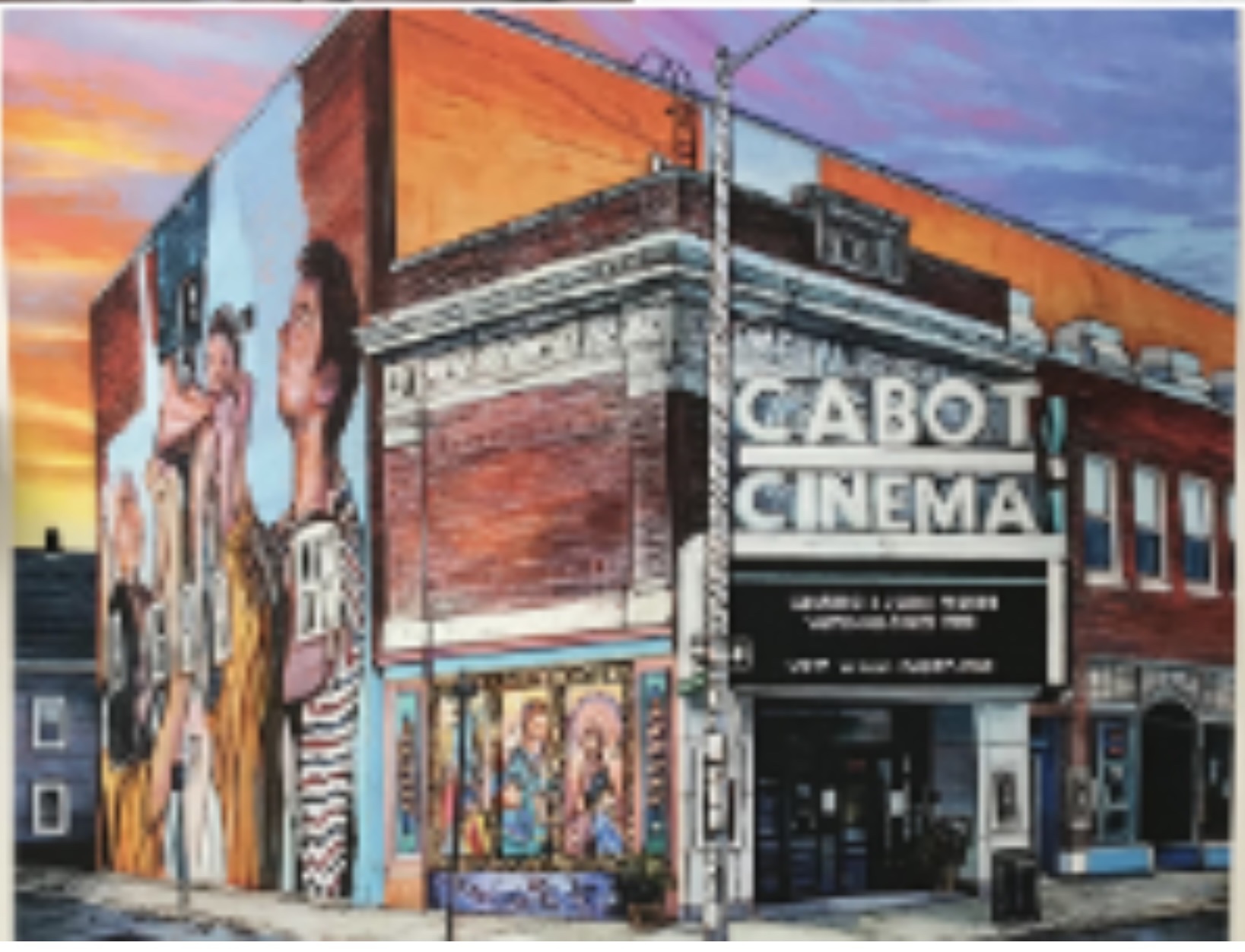
The Cabot, photo courtesy of the Cabot

Perhaps the most important fact about the evening is that — for anyone reading this in the future who did not personally experience Covid 19 — is that few live musical performances have taken place for about two years. Another equally important fact is that, again because of Covid 19, it is no longer routine to go out or meet with friends for dinner.

The focus of last Friday night was a live concert at the Cabot Theater, a half mile from our house, presented by four folk singers whose music we love and who we’ve seen many times, though in smaller venues. They are Patty Larkin, John Gorka, Cliff Eberhardt, and Lucy Kaplansky. Usually I’m the one who suggests that we get tickets for particular concerts, but this time, it was Paul, a month ago when the performance was advertised in a local newspaper. I looked up the information and didn’t act on it, didn’t order tickets.

Last Wednesday, I met a friend, ScottIe, for lunch. We hadn’t seen each other for quite a while, again, courtesy of Covid, and we delighted in each other’s company. She mentioned that she and her husband were coming to the Cabot on Friday, inviting us to attend, as well. The next day, I got tickets for the performance, which was to begin at 8 pm.

On Friday, at about 7:00, already beginning to feel sleepy, I said to Paul, I hope I don’t fall asleep. We’d been going to bed at 9:00 or 9:30 each night. I was feeling like I didn’t even want to go, didn’t want to go out into the bitter cold for this concert, aptly named, “On a Winter’s Night.” But, of course we did, arriving ten minutes early, to allow time to have our vaccination records checked.

As soon as we were seated, I noticed two couples in front of us, friends from my Quaker Meeting. We hadn’t seen any of them in person in months. The excitement in me began to rise.

Patty Larkin introduced the singers and John Gorka began the performance. From the first note of his first song, my heart was pulled, resuscitated. Each performer reminisced about how they had first sung together, going back forty or fifty years to Greenwich Village. At one point, Cliff Eberhardt commented with emotion that they hadn’t known whether they would ever have the opportunity to sing together on stage again, like this. That was one of the many times that tears pushed themselves out of my eyes.

They sang for nearly two and a half hours, in this gorgeous, 102 year-old theater. Thirty years ago, when we were looking for a house, on my list of requirements was that it be located within walking distance of the Cabot. Last Friday, it was too cold to walk, so, even though it was only a half mile, we drove.

During the mid-performance break, we walked around the theater to say hello to the ten people we knew. In addition to our Quaker friends, four were neighbors, sitting behind us at the cafe-like area, right next to ScottIe, who had mentioned this concert to me only two days ago! I introduced them to each other, and my heart swelled. One of my neighbors, Melissa, pulled me aside to tell me that, though we hadn’t seen each other for months, the week before something had reminded her of me. She wondered if I had felt her sending me a hug filled with love.

During the second half of the performance, each song sounded better than the last and further nourished my feeling of being in community. It was only a Friday night, but the night was full and my heart was even fuller.

Copyright © 2022

Family Secrets

Every family has secrets and mine is not an exception. My dad’s affair, my cousin’s adoption, with my mom sworn to secrecy — these are my family’s most prominent ones, in my immediate family, that is. However, during this week, celebrating Dr. Martin Luther King, Jr., I am reminded of the secrets kept by the world’s family, secrets that hurt us, whether or not we’re aware of it.

These can be divided in various ways; I’ll work with two major categories, native Americans and people of color. The earlier secret, no longer a secret, though not yet openly acknowledged by everyone, is that we are all on land taken from native Americans. The land on which my particular home sits was taken from the Naumkeag and Pawtucket tribes. Yet, I leave it and reenter it every day, rarely giving it a thought, in fact, mostly accepting that my husband and I own it, that it’s ours.

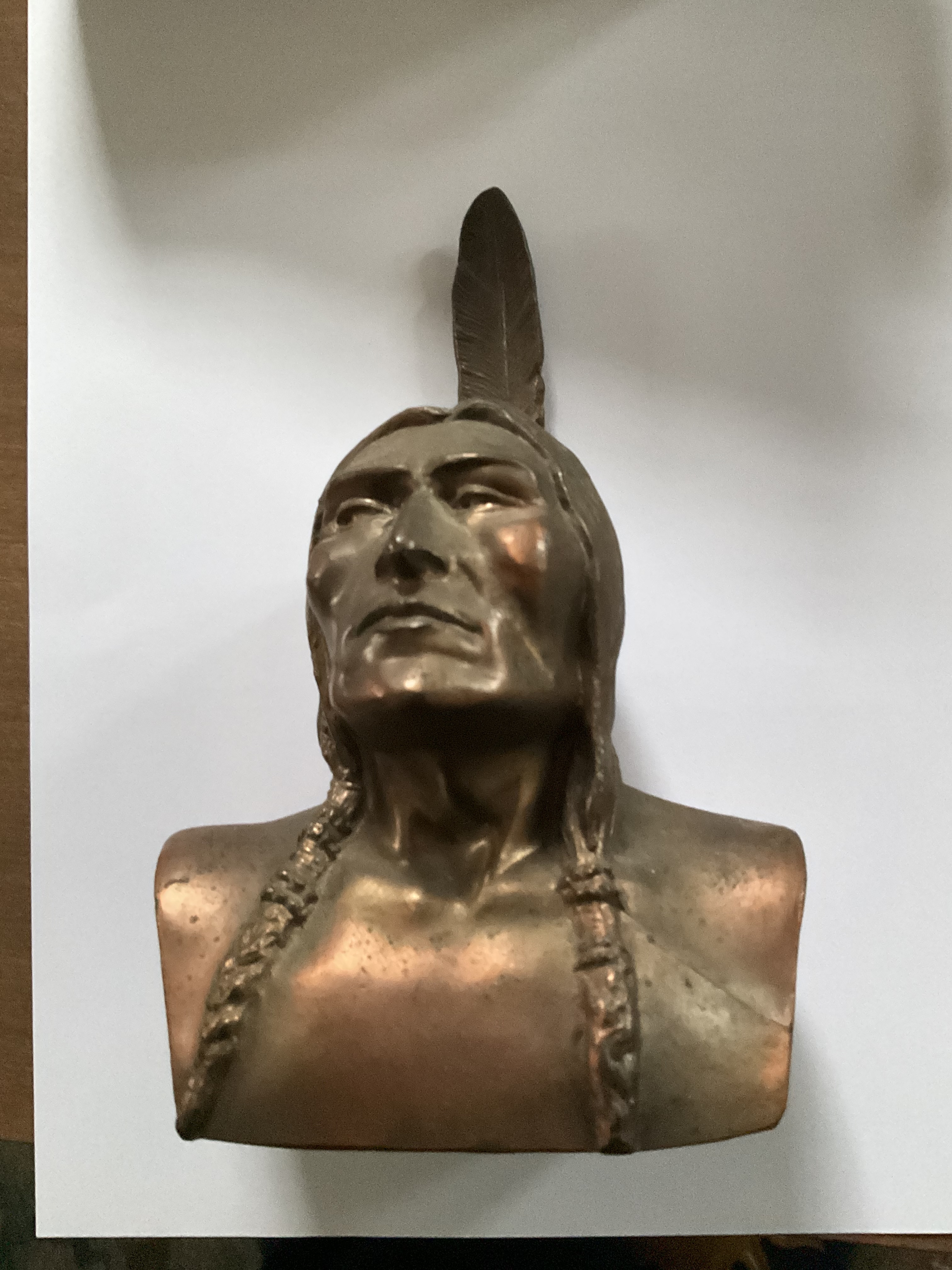
The National Shawmut Bank of Boston, © 1955 (photo by author, 2022)

As with many secrets, once it’s found out, what do we do with it? With my father’s affair, we ignored it. It was decades after it ended that I learned about it. He had remained with my mother, so what good would be accomplished by spreading news of it among others? With my cousin’s adoption, it was kept a secret by my mom at my aunt’s request, finally shared with me at my cousin’s wedding, when my aunt was terrified that her secret would be revealed. It was finally shared with my cousin, herself, years later when my sister, angry at our mother for an unrelated issue, called our cousin to break the news to her.

I spoke with my cousin shortly after and learned of her relief. She described to me her familiar feeling that she didn’t really belong in our family. So, hearing the truth was simply reassuring of her instinct. Interestingly, she was the only one in our family interested in genealogy. In fact, she had done considerable research searching for evidence that our lineage would allow us to be recognized as Daughters of the American Revolution (DAR); our fraternal grandmother was an Adams. The unanswered question was, was she a direct descendant of one of the President Adams?

So, back to our larger family’s secret: what do we do with knowing that our homes were built on stolen land? Most of us would not intentionally steal a bicycle, never mind a piece of land. Additionally, we presumably paid for our land, if only with the purchase of our house. The value of the land is denoted specifically on the tax bill from my city, whose City Hall is similarly built on land taken from the Naumkeag and Pawtucket tribes. My property tax bill itemizes the value of the land, differentiated from the value of the house. I pay those taxes faithfully every year.

The problem? That money did not go to those who lived on this land centuries ago and who believed that no part of the earth – land – could be owned. When we bought this house and the land beneath it, the money we paid for it went to the previous owners and realtors. None of it went to the Naumkeag or Pawtucket tribes. Neither would they have accepted it, because they did not think of the earth as for sale.

According to Native American poet, Layla Long Soldier, President Obama signed the Congressional Resolution of Apology to Native Americans in 2009. (Whereas, p. 57, 2017) Was that enough to compensate for the brutal crimes of our ancestors? Moreover, are we responsible for the immoral actions of our ancestors? I’m not going to attempt answers; however, I must raise the questions. I believe that we must each consider possible answers, not because the answers are easy, but because within each of us is a moral center, whether or not we pay it heed.

Now, back to my starting point, what this week’s tribute to Dr. Martin Luther King, Jr. brought to my mind: the family secrets revealed by CRT, critical race theory. Do we want to display our more recent crimes against humanity that our closer relatives have committed? I’m not necessarily referring to our siblings or cousins, but to friends and relatives within several recent generations who legalized segregation, penalized integration, and punished, even killed, people for the color of their skin.

I propose that it’s not enough to apologize, to say we’re sorry. How do we begin to make up for the lynchings, the slavery, the redlining, the legalization and promotion of separation, whose after effects continue to cause harm? I don’t have the answers, but I know that we must ask the questions. These family secrets cannot remain secrets any longer.

Copyright © 2022

Magnets and Friends: Part 2 — Train Friends

I began Part 1 with a brief reference to magnets and their fields and the frequent parallels to relationships between friends, either attracting or repelling. Coincidentally, I have recently read a book that has captured my attention more strongly that any other in recent years. Titled The Depth of Our Belonging, it was written by Mary Coelho, both a scientist and a theologian. It combines and describes her knowledge of physics and mysticism in a way that eliminates the separation traditionally given to these two topics. Furthermore, its description of fields aligns powerfully, though not directly, with my sense of natural attraction or repulsion between individuals. For any who do not have a clear sense of quantum physics, this five-minute video may be enlightening:

Now, after that tangential aside, I will switch back to descriptions of some of my friends, my two ‘train friends’.

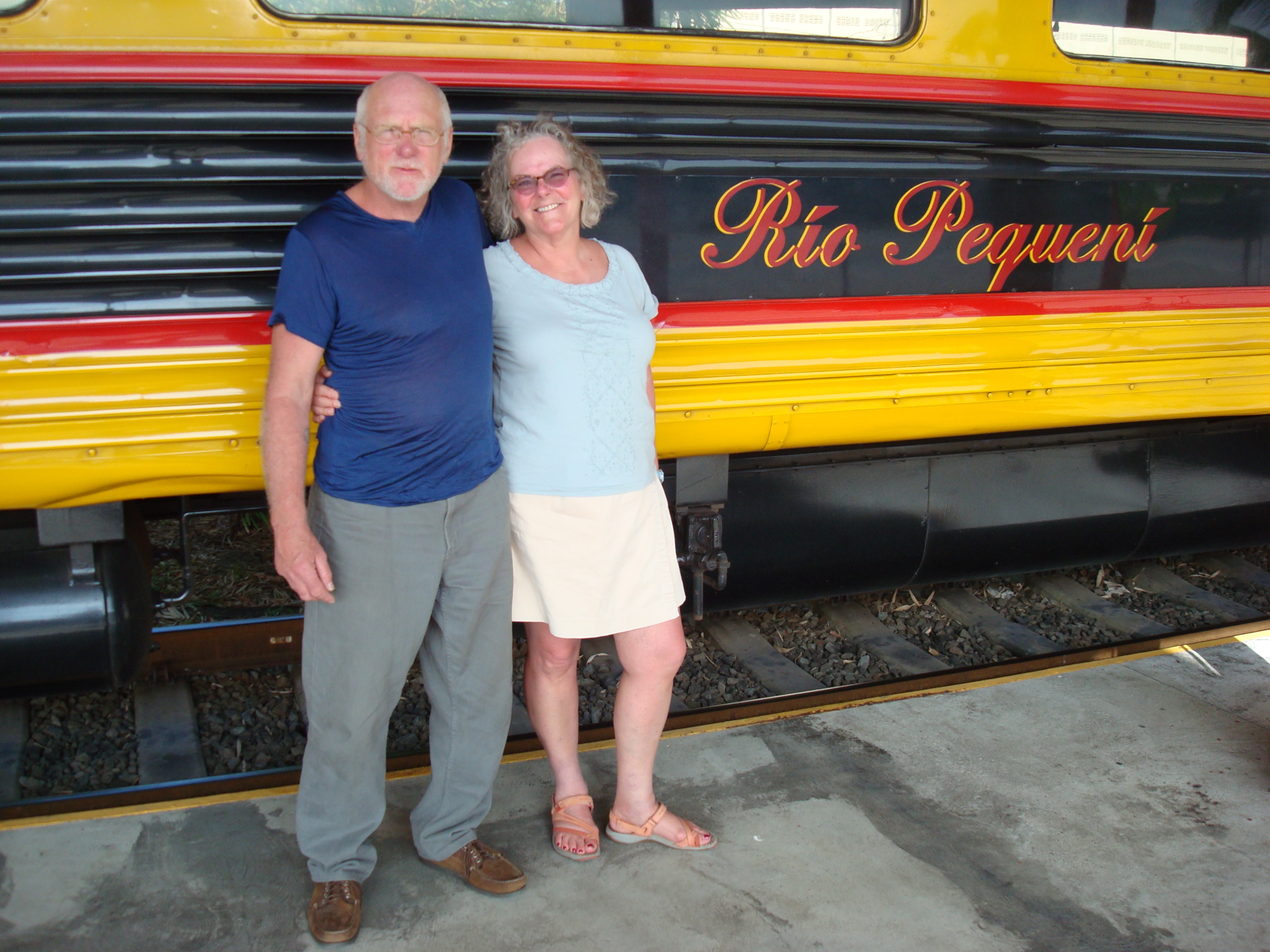
Unrelated to this article, this is my husband and me before boarding an eastbound train in Panama during 2007, after crossing the canal on a westbound ship.

My first ‘train friend’ is Felicia, who I met standing on the platform in Beverly Farms about 35 years ago. First, we spoke briefly, slowly getting to know each other. After a couple of years, she had certainly gotten to know me. One day she called and said to me, “I have met the man for you.” She arranged our introduction, unbeknownst to him, and we have been married, mostly happily, for 31 years. Felicia remains a good friend.

Next is David, a singular friend, in that he was not from a group of friends that we shared.

Although most of my friends came to me from groups, occasionally one stands out as an individual from the beginning. This train friend is David. We met about twenty-five years ago on the train that traveled from Gloucester to North Station early every morning to take us to our jobs in Boston. David got on the train in Gloucester; I embarked about ten minutes later in Beverly Farms. At that end of the trip, there were not many commuters, so it was inevitable that we should notice each other during our commuting routines. It was not on the train, but on our twenty minute walk from North Station that we started to speak to each other, having recognized each other from the train.

Now, despite the fact that we became and remain friends, I would never have guessed that could happen. David’s presence on the train was not inviting. On the contrary, he was grumpy looking, never smiled, certainly never spoke.

It was only after some months of sharing the same walk from North Station that we sometimes began to sit together on the train. However, this was only after a stern warning from David: I must not speak to him on the train! He was the Sunday Boston Globe Magazine editor and spent his commuting time working, so he was not to be interrupted. I respected his admonition and a relationship slowly developed between us, fifteen minutes a day, three or four days a week over a year or two, as we walked and talked. Among other things, we shared stories about our spouses. His wife is Sharron, referenced in my recent blog posting, a fascinating woman with a distinguished history.

I began to describe him and his tales to my husband in the evening, eventually suggesting that we invite David and Sharron to our house for dinner, to allow a conversation with David lasting more than fifteen minutes. Paul agreed, so I presented the possibility to David the next day. We discussed it, agreeing that it might destroy our perfectly fine relationship. After he presented the invitation to Sharron, we planned our dinner. I have no memory of what we served for dinner or of our discussion, but the evening was a success. One outcome was that we made each other’s annual holiday card list, which was a coup for us, as their holiday cards and letters are certainly the most creative and entertaining that we ever receive! Of note is that shortly after (the late 90’s), I received a promotion and rarely commuted by train, more often by plane when travel was required, and generally worked from home, so we no longer shared our commute. If we had not made the transition beyond commuting friends then, our budding friendship would have ended abruptly.

We have also been included in their annual Christmas Eve party, where guests are invited to share their best pot of chili or a pie with each other. Sure, it meant we had to split the evening between their house and my cousin, Bobby’s, who also hosted a joyous house-filled party that night, but we managed to find time for both. Sadly, neither has occurred during the past two years.

And, that’s the tale of my train friends. In Part 3, I’ll introduce you to friends who I’ve met through work, my neighborhood, and my writing groups. And, maybe I’ll get back to magnets, too.

Copyright © 2022

My Allocution

My next hearing is scheduled for Friday, my first in the Superior Court of Concord, NH, for deliberation of options in preparation for the full jury trial for my ‘crime’ of trespassing at the Bow Power Plant, the final coal-powered plant without a shutdown date in New England. I will be there as one of nineteen codefendants, some of us defending ourselves (pro se), most of us defended by our two fabulous attorneys.

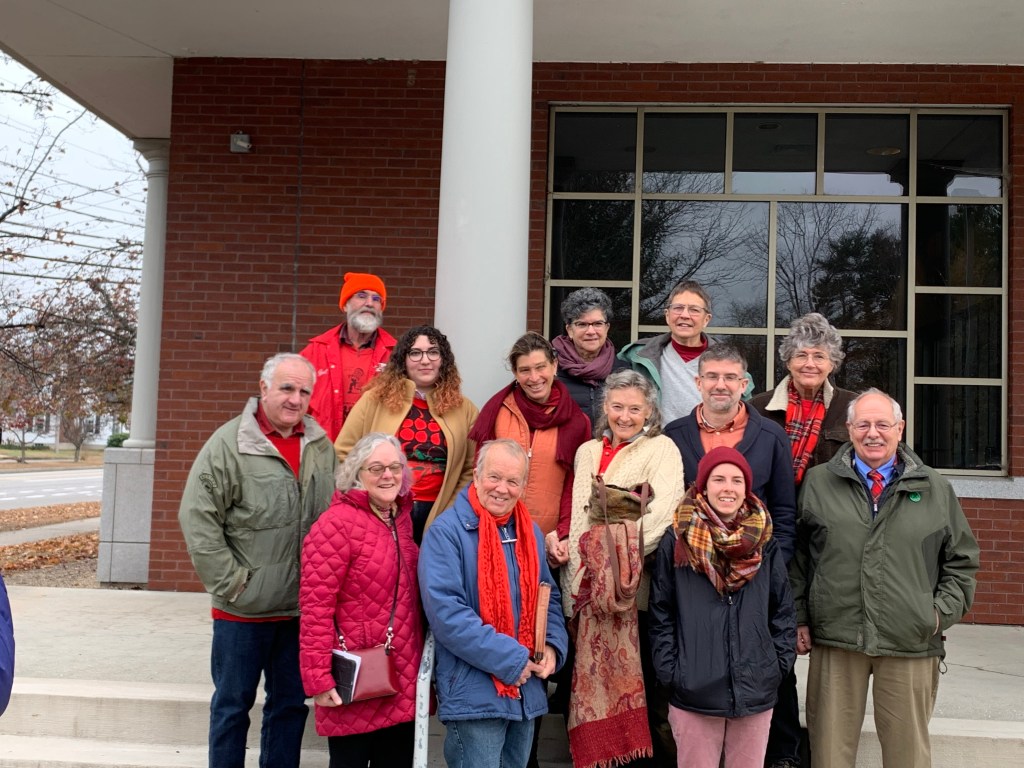
Some of my codefendants and me, 2021

In January of 2021, one full year ago, before the hearing during which a judge would announce my sentencing, I had the opportunity to present an allocution to the judge. Because of the pandemic, he had not seen me in person, only on Zoom. The purpose of the allocution was to present background information about myself that might alter his opinion of me and my ‘crime.’ How do you briefly tell another person who you are? Here’s what I wrote:

Dear Judge Kelly:

Here is my attempt at inviting you to get a sense of my character and my motivation. I am 74 years old and this is the first time I have ever been arrested. It has never been my goal to be arrested.

However, I see the seeds of this feature of my character in the memory of when I was 10-12 years old. Raised a Catholic, I was at Mass and really hearing the priest during a sermon on Jesus. As I looked around the huge ornate church, I wondered, “Do all of these people really believe this? Would I have denied him or stood by him?”

Next, I vowed to myself that, should I ever be in that position, I would stand up for what I thought was right, regardless of the cost to me.

I have been a Quaker for 30 years, committed to pacifism. I have used my first amendment rights often, during the Vietnam war in my 20’s, for women’s rights during my 40’s, for social justice during my 60’s, and now for our climate. I never begin by protesting, but by making changes in my own life – for example, reducing my use of plastic and driving an electric car.

I am proud to have Sharron as a friend. Hers was the first gender-based case that Ruth Bader Ginsburg argued in front of the Supreme Court. When Sharron described this to me decades ago, she said that, before RBG accepted her as a client, Sharron had to recognize that she would not be likely to benefit personally, because of the expected time of resolution. That didn’t stop Sharron.

Similarly, for me, reducing climate change is not likely to benefit me personally. The science is clear: we must change the climate path we are now following or the planet will pay a high price.

For many people, grandchildren are a primary reason for speaking up for climate justice. I have no grandchildren; that is not my reason. At my age, I am not likely to reap the benefits of reducing climate change. So, what is my motivation? I care deeply about this planet. I see the damage done by coal, not in myself, but in friends who have asthma. Although I will not personally benefit, I want to do my part: I care deeply about our planet.

Sincerely,

Carole Rein

Copyright © 2022

Magnets and Friends: Part 1 — Goddesses

I have always been fascinated by magnets, whether shown on a world map, indicated by arrows pointing to the North Pole, a magnetic desk gadget holding paper clips, or two magnets, either attracting or repelling as their relative positions change. Recently, I have wondered whether there is a similar invisible mechanism governing friendship. As I consider my friends, I recognize a strong pull towards some and a similar repulsion toward others, and everything in between. Yes, we can often identify common interests that pull friends together or disagreements that push them apart, but it’s something else that contributes to the best, longest lasting friendships.

I have a confession to make: unlike most people I know, I have generally valued friends more than relatives. Sacrilegious! I remember as a young teenager believing this deeply, thinking that my friends knew me better than any relatives ever could, and that would always be so. Has that changed as I’ve aged? In some ways, yes, but I continue to value friendship deeply. This essay attempts to capture some of those friendships, not because they have all lasted forever — many of them had limited lives — but because I value many friends in so many different ways. Many of my friends have come packaged in groups, based on activities that we share. Let me describe some of those groups.

I must begin with the Goddesses, simply because that group began in such a distinctive way. About thirty-five years ago, two friends decided they wanted to enlarge their circle, so they each invited someone unknown to the other to join them. Then, those two did the same, until there were about a dozen of us. We met about once a month at someone’s house, then after about six months, spent a weekend together at a vacation home. We were different ages, covering at least three decades, different professions, single, married, some mothers, some not, varied in many ways, but all white, working women, all heterosexual. We thought of ourselves as a diverse group. Now, thirty-five years later, some have moved to other states, one to another country, one has died, and another has dementia and can no longer recognize us. The six of us who remain are still connected through this shared past and reach across miles and various schedules to connect, once every few months.

Earlier this month, four of us met for lunch at a central location. Food has always been an important part of our gatherings. As always, we remembered those not among us, recognizing the reasons — work and family schedules, as some of us are still young enough to be employed and/or raising children. As always, we relished the blessing we experience, being in each other’s lives, feeling treasured. Also as always, surrounded by chatter, we each did a ‘check-in,’ a time when the spotlight shines on us individually, allowing time to share an uninterrupted unveiling of our current lives, our fears and our hopes. An important part of our gatherings has always been nurturing and nourishing each other’s dreams.

We spent some time remembering our early days, deciding that we need to schedule a long weekend together, even with Covid. Preparing for this lunch in this restaurant, we were each tested prior to meeting. We also talked about something not remembered recently: our goddess names! Back at the beginning, we each had bestowed upon us a special name, including these: Pasqual, for the tremendously creative cook among us; Diva, for the musically gifted woman; Skyclad, for the first among us to skinny-dip on one of our long weekends; Tumbleweed, for the wanderer; and more. For the first time that I can remember, we suggested the giving of new names, recognizing the many changes we’ve all experienced and the new people we’ve become. All those decades ago, I was called Spiritual Agent, which I newly appreciate and am not certain that I want replaced.

Andrea was a woman I met on a cruise taken to celebrate my fiftieth birthday, a cruise filled with authors who wrote of psychic and paranormal phenomena, including Raymond Moody and Shakti Gawain. Andrea was the first among us to die, leaving us about three years ago. Many of us gathered on Martha’s Vineyard, one of her homes, to celebrate her life with others who had heard of ‘the goddesses,’ but had not met us. Andrea was a creative artist and her colorful urn, of her own design, has become the inspiration behind the urn which I am having made for my own ashes. I was one of the many who read a poem at her service, this one by John O’Donahue, one of our shared and beloved poets. When I finished reading and returned to my seat, it was to the repeated question: are you one of the goddesses!? Our reputation had preceded us.

Andrea, surrounded by other goddesses, our last visit

With the goddesses, and going back to magnets, although some of us had strong connections to each other, what we most shared was a strong, seemingly magnetic pull to something invisibly at our center. We never questioned or identified it. It was simply there. We all felt it, whether or not we openly acknowledged it. In other groups, it is clearly defined. My book group clearly gathers to discuss books, my writing groups clearly meet to write, and my neighborhood group gathers because we all value our neighborhood. Other groups also often have identified ‘centers,’ if you will, that are mutually agreed upon and remain, at least superficially, as the reason for continued gatherings.

Other friend groups I need to include are my tap dancing buddies, rowing friends, friends with dogs, the Kiva group, Quakers, work friends, activists, and my oldest friends, those I have known since high school. These circles of friends could be illustrated with Venn diagrams, overlapping circles, each with its own distinctive invisible center. For example, the Kiva group overlaps my neighborhood group, with a shared area. Similarly, my dog friends overlap with neighbors and my book group. Getting a dog about twenty years ago, sadly deceased about seven years ago, led me to an entirely new group of friends. Many of those friendships have outlasted our dogs. Once you’ve had a dog and loved it, a kinship easily develops with other dog-owners. Conversation flows effortlessly and many shared concerns are apparent.

To be continued . . .

Copyright © 2021

First European Trip

In 1960, the New Yorker cost only twenty-five cents and a person could tour Europe for five dollars a day. Arthur Frommer published a guidebook promising that and I believed it. When I graduated from high school in 1964, I asked my parents as a graduation gift, to take me to Europe. My mom wasn’t likely to travel even to Boston, but my dad was all for it. So, we bought Frommer’s book and it became our guide for a three-week trip during the fall of 1964, when we scheduled flights between seven countries, with 2-3 nights in each: England, France, Italy, Spain, Switzerland, Germany, and Portugal.

The idea was that for two people, it was possible to spend $10 a day to include food, housing and inexpensive entertainment. Sounds impossible, but we learned about tiny private hotels that were clean and safe, and that were within walking distance of public transportation. European hotels, even the smallest, then – and now – always included a simple breakfast of fresh bread, cheese, meats, fruit, and coffee. For lunch and dinner, we used our guidebook to find inexpensive restaurants that were unknown to most tourists, but carried delightful local specialties.

My first flight ever was that trip to London when I was seventeen. I was mesmerized by the sight of looking down on clouds and that fascination has never left me in my hundreds of flights since then. The meals were, to me, gourmet, and elegantly served, even in economy class, with breakable dishes and cloth napkins.

A strong memory of something nonexistent now is local currency. This was before ATMs, so we used traveler’s checks, exchanging just what we expected to spend when we arrived in a country, exchanging the checks for pounds in England, francs in France, etc. I’m not even sure my father had a credit card, so I don’t know what we would have done if we’d run out of money.

We visited for dinner with my cousin, Bobby, and his wife, Maryann, in Spain. They served us a potato frittata, eggs and potatoes, which I thought was quite elegant. I had my eighteenth birthday in Italy and chose a mohair sweater as my gift.

Other memories include being impressed that my dad remembered more French from high school decades earlier than I did from my just completed four years. I remember my first impressions of the Eiffel Tower, the Vatican, the painted roosters prominent in Portugal, a Toblerone candy bar in Switzerland, and a really strong impression of the catacombs below Appian Way, the dirt tunnel where early Christians hid.

One striking memory is of our last meal in Portugal, before our flight back to Boston. We were counting our change, our last bits of money, to be certain that we had enough to order. The waiter noticed and assured us that he would provide us with drinking water, which had to be purchased. At that time, drinking water in Europe was bottled, as water from the faucet was not safe to drink, or so we were told. My father and I were both touched by the kindness and generosity of that waiter. It remains a lasting memory.

The strongest after-effect of this trip was that I became fearless about foreign travel. I have never been intimidated by making travel plans or flying to new places and experiencing new cultures, even when it costs more than $5 a day.

Copyright © 2021

A Wonder-Filled Day

September 2021, almost 75

Today, 10/20/21, a Boston Globe essay by Anil Seth entitled “Reality is what you make of it”, included this: “how things seem is not necessarily how they are,” causing me to ruminate about my day yesterday and adjectives I might choose to describe it. Last week, my husband insisted that we take a day this week, scratch everything from our calendars, and take a ride to New Hampshire to appreciate the foliage. After grumbling about it a little, because every day I have some kind of a commitment that I enjoy, I consented to skip one of my Spiritual Exploration Zoom sessions for our day on the road.

The weather forecast was perfect and we’d decided to take my car, an electric Mini Cooper, which gave Paul his opportunity to grumble. He would have preferred to drive his gas-guzzling truck, more comfortable for him, less so for me as a climate activist, both physically and philosophically.

As always when traveling in an electric car, I first determined where we would recharge, at a place I had used before. The drive had been pleasant enough, but when we approached the recharging location, ongoing roadwork required detours, unmarked, forcing us to drive in apparent circles. Finally, we found our way and hooked up. Because Paul puts up such a fuss about the time needed for recharging, I was feeling defensive and frazzled. Paul, on the other hand, was totally gracious and accepting of the situation.

We walked around the Rockingham Mall and I took the opportunity to buy a car connection device for my new iPad, then were back on the road to the Hookset welcome center, where I love the grilled apple, fig and Brie sandwiches. While we were eating at this place that I love so much, I made a comment about it not being very elegant, but that I loved it anyway. We ended up having a conversation about our perspectives on styles and our tendencies to put down those that are less classy, while at the same time, wanting to be accepting of all people and all styles.

I reflected on my decision to attend Harvard, wanting so much to have that credential, while simultaneously, not feeling worthy. I remember finally making the decision to apply, looking at the diploma in my advisor’s office, imagining that some day, I would also have one. Now, it is actually on the wall of my home office and I still can’t quite believe that I earned it.

The conversation continued as we drove during this gorgeous day under a bright blue sky, brilliant scattered clouds, surrounded by beautifully colored leaves. I considered the word, ‘wonderful’ and wondered about its relationship to ‘wonder-filled.’ I’d never considered this word before, but I was experiencing a day filled with wonder, a ‘wonder-filled’ day. Paul’s urging to take this time was ideal and my decision to skip the class on Spiritual Exploration left me with a different and unexpected spiritual exploration. I was also experiencing my deep privilege, that I was able to simply choose to experience the wonder that filled this day.

Then, we took route 101 across New Hampshire, before heading home. Yes, in the words of Anil Seth, “Reality is what you make of it.” But, also, we have to work with raw materials, most of which we didn’t get to choose, like my multiple privileges.

Copyright © 2021