What Can You Do?

Do you look at the world and think, what a mess we’re in? Do you ever think, but what can I do to help? The problems are so big and I’m only one person. True, but we each contribute to everything that happens in the world, one person at a time. Because there are so many major problems, I’m asking you to help change the world, in a way that matters to you and in a way that’s possible for you. None of us can do everything that’s needed, but each of us can do something to help.

So, what matters to you and how can you help? Here’s a primer to begin to answer those questions. Choose one task as your own.

Use your brain — Learn, understand a little more about a problem that interests you. Over the years, I’ve learned that the climate change that’s already happening affects minority groups more quickly and more strongly than people in privileged groups like me. So, working to address climate change also recognizes that Black Lives Matter.

Use Your Hands — We need creative people who can design and make signs, banners, costumes, and more to spread our messages! If this is where you shine, we need you and your skills.

Use Your Feet — When you hear about a rally or a march for a cause that speaks to you, show up! My first involvement was in the 70’s, at a giant peace rally at the White House. It felt a little scary, yes, but it also felt like I was doing something. Sometimes I rally for social justice, for Native Americans (like in Plymouth, MA on Thanksgiving day), or against the financial supporters of fossil fuels, such as Chase Bank, to bring attention to money that endangers our planet.

Use Your Mouth — Do this only after using your brain! Talk to others or write to share what you know. Ask questions. Often, when it’s unclear why something is happening or being heavily supported, investigation reveals that someone or an institution stands to gain financially from specific actions, for example, a utility company.

Additionally, contact your legislators. Hundreds, maybe thousands of bills work their way through our local, state, and national governments every year. None of us can be attentive to all of them. However, we can support some of them with emails, letters, and phone calls. If your city and state elected officials don’t know you, get to know them! Talk to them, learn their priorities, and tell them about yours.

Use your $$$ — Do this in three ways. 1. Choose where you spend your money and know who benefits. In general, shopping local keeps your money local, rather than to a corporate entity. I have chosen to never buy from Amazon, including Whole Foods. Additionally, I intentionally use my local book shop, where they gladly order what I want, if it’s not already in stock. Avoid chains and support local vendors and restaurants, when possible.

2. Contribute to causes that matter to you and identify those that use their money equitably, such as NAACP, which now has a north shore branch. Climate groups include 350MA, NoCoalNoGas, Extinction Rebellion, and more.

3. Know your credit card and avoid those offered through Chase Bank or TD bank, because of their heavy financial support of fossil fuels. When I realized that my AARP card was through Chase bank, I notified AARP why I was canceling that account and that I would gladly start another, if they used a different bank.

Use Your Connections — Many organizations exist at local, state, and national levels. If you are a member of any, get to know a few people and their perspectives better. When you share similar ideals, you also probably want to move in a similar direction. Enlarge your world, activate your quiet motivation, take a new step. Perhaps you’re ready to play a stronger role in organizing or in mobilizing, in reaching out to others. Take that step!

Use your whole body — There are so many ways to be involved, whatever your age or situation. I have stood in front of a moving coal train, seeking to stop delivery. I have been arrested, jailed, and am awaiting trial for trespassing. Jane Fonda will be 84 on Dec 21, 2021 and continues to protest and be arrested. You’re not too old or too young. This is the perfect time to try something new, to step out and make a difference in the world. What will your next step be? How will you help to make the world a better place?
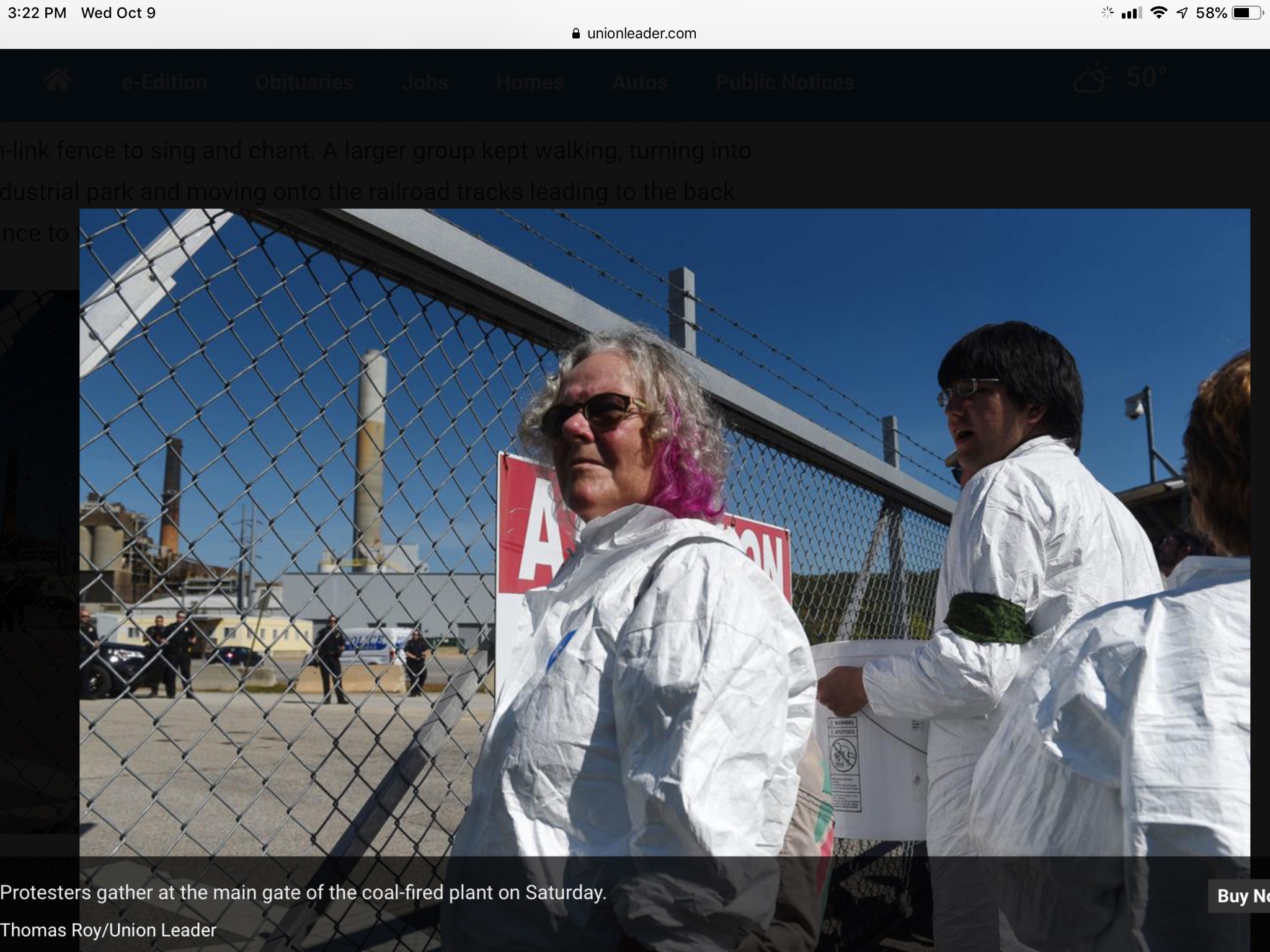
Shortly before my arrest

Or, if you’ve been active — please know that you can — and should — take care of yourself and take a break.

Copyright © 2021
Being Psychic

We each have our own opinions about psychic phenomena: whether it exists at all and, if so, in what forms. This is my story, believe it or not.

When I was a teenager, my father sometimes took me to services at a Christian Science church, where individuals spoke out of trance and addressed others about loved ones on the other side and their messages. Although none spoke personally to me, I believed it was real, genuine. Shortly after, in the early 70’s, I took a class in Silva mind control, during which I learned to interpret images that I ‘imagined,’ so that I could translate them to reality.

For example, I was with a woman who asked me to imagine her dad. When I did, I saw him standing in water up to his knees, which meant nothing to me. When I described this to the woman, she told me that he was an alcoholic. Similarly, I learned that when I saw an image to my left, it had already happened. To my right meant it was in the future. This is not universal, so each person needs to learn how to translate accurately within her own brain.

With this predilection to believe in psychic phenomena, I thought to test it as an undergraduate by majoring in physics. I was certain that science would support my beliefs. When my advisor learned that I had studied astrology, it was clear to me that he was biting his tongue, not sharing his genuine reaction. I studied and learned the fundamentals of quantum physics, earning an A, during the only semester when I also earned my only C – in typing. What I learned left me believing there was room, scientifically, for phenomena not yet accounted for.

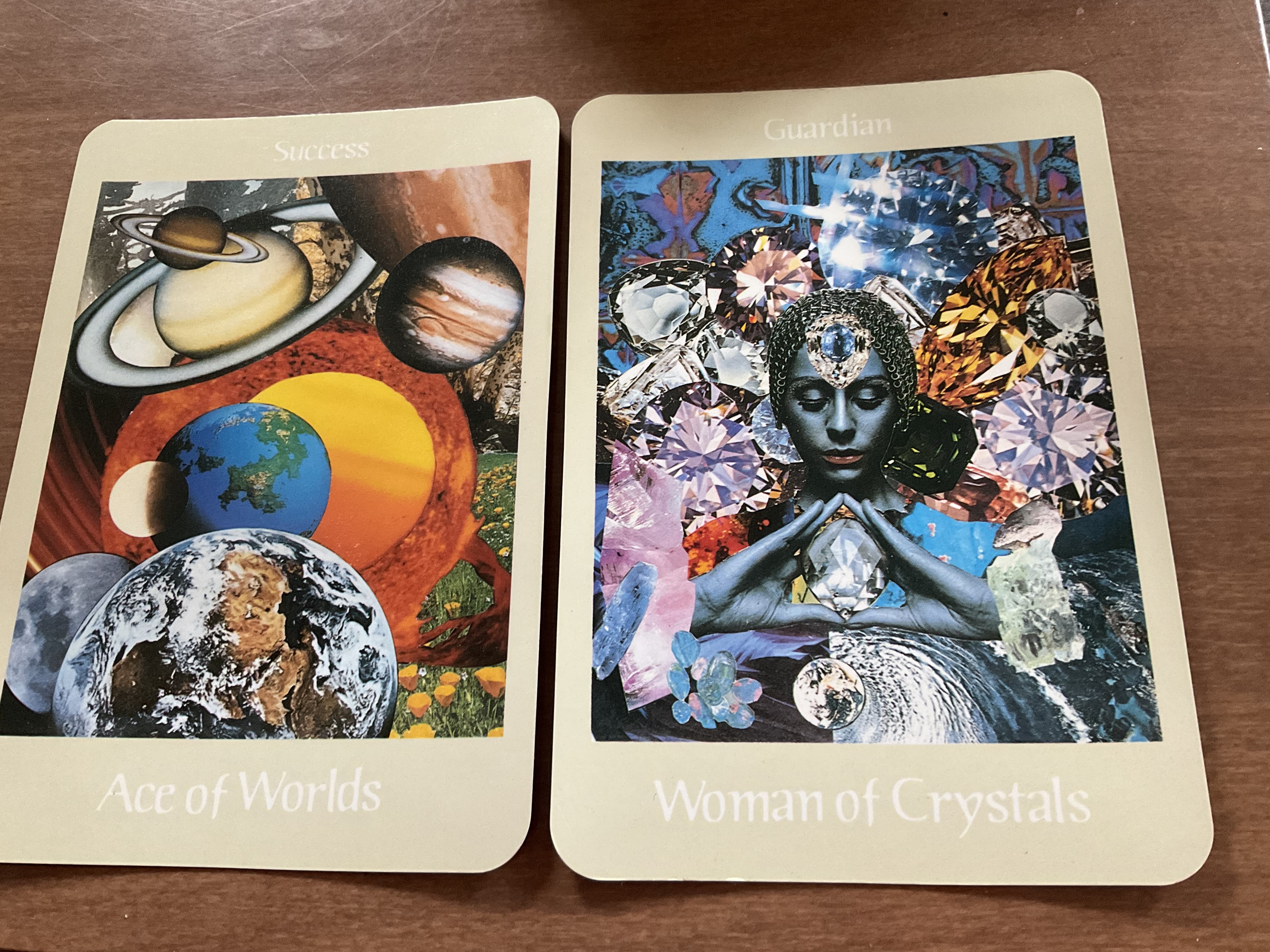
For my 50th birthday, I treated myself to a Caribbean cruise that included several favorite authors that I loved, such as Shakti Gawain, who wrote about the power of imagining and creating your future, and Raymond Moody, who was among the first physicians to describe and study near death experiences. On that trip, I met James Wanless, Ph.D., and began to learn to use the Voyager Tarot Card deck that he had designed. An important part of what I learned was how to begin to make sense of my visions or imaginings.

Two cards from the Voyager deck

For many years, using that deck, I read the cards for willing friends and family members. The limitation was that I was never certain whether what I was seeing came from already formed opinions of mine about that person. Sometimes, when I saw something that didn’t quite make sense to me, when I described it, it made sense to the person, who described the connection to me. Sometimes, because I kept notes, as time passed, something happened that clarified the meaning. For example, for one friend who was married and the mother of two, her cards showed multiple motherhoods, and it was not her intention to have more children. The meaning became clear years later, when she became an Episcopal priest. She wasn’t the conventional ‘father’ priest, but a ‘mother’ to her congregation.

After some years of practicing on family and friends, I chose to use an opportunity that presented itself to me. I live right next to Salem, Massachusetts, perhaps the psychic capital of the world. One of my friends had a part time job working in the shop of a psychic and asked me if I wanted to interview with her boss, Barbara, to work during the Halloween season. I accepted, having no idea how it would work out.

Barbara interviewed me by asking me to read the cards for her. One of the unspoken rules is to present whatever you see in a positive light. In my reading for her, I saw a lot that was positive and some things that were deeply negative. I presented it all in as positive a light as I could and she was satisfied. I had my first job as a psychic. About six months later, her husband and partner died unexpectedly and I recognized the meaning of what had shown up in her reading months before.

Some of the readings I performed for strangers increased my understanding of the power of psychic readings. For example, that first year that I was reading in Salem, 2005, in one reading, I kept seeing (imagining) my client in a closet. The obvious interpretation, that she was a closeted lesbian, was clearly not right. When I described what I was seeing to her, she told me that she was from New Orleans and that since the recent hurricane Katrina, she had been living with someone else, in a space about the size of a closet. She asked if I could tell how long she would be there. I ‘knew’ that it would be about six months. She said that sounded reasonable and left our session with increased peace of mind.

With another client, I kept seeing him in an oversized easy chair, with clear detail of the pattern on the fabric. It made no sense to me, but when I described it to him, he said that chair was in his house. Then, I ‘knew’ that this chair was a place of quiet and calm for him and I encouraged him to sit there when he was agitated. He also left our session with increased peace of mind.

But every reading was not so successful. Among the challenges that I experienced was conveying negative information in a way that the client could absorb and use. One woman had as a central card in her reading, “Anger.” It was clear that she was an angry person and I was very uncomfortable conveying that to her in a way that could be helpful. I was also unsuccessful. She was my only client who, after the reading, asked for and received a refund because she was not satisfied.

I’ve also experienced being on the other side of a reading. A couple of years ago, I saw a medium, whose messages to me were meaningful. She told me that my parents, both dead, were with us and offered multiple comments. She said that my mother remarked that I had saved and kept many of her recipes. I acknowledged, eagerly, “Yes!” The medium then frowned, as she told me that my mother was saying, “But, you haven’t made any of them!” Again, true.

The message from my dad was more serious. The medium said my dad had a message for me about someone whose name began with D. “That would be my brother, David.” Yes, she said. My dad told her that, although my brother was generally healthy, he had a particular concern right now. That was true. David is a marathon runner, but needed hip surgery. The message from my dad was that the surgery was going to be successful and that David would recover fully and quickly. That also came to be.

So, I worked successfully for three Halloween seasons in Salem, then retired from that business. I learned a lot and provided comfort to many people, but that work takes a lot of psychic energy. Being psychic, I believe, is a quality that each of us possesses, like the ability to act or sing or dance. Each of us chooses to develop — or not — each ability. And, it takes work.

Copyright © 2021

The Back of Her Hand

Our language has many terms familiar to all of us for specific small parts of the body, such as knee, elbow, shin, nostril, thumb, palm, and more; however, there is no such term for the back of the hand. I’ll come back to that later.

I just spent two fun days in New York City with my friend, Sara, in celebration of my 75th birthday. We’ve done this many times before, though we skipped last year, because of Covid. We take the six am train from Boston to Penn Station, walk to a nearby hotel, this year the Hilton Times Square, deposit our luggage, before heading to Macy’s, sixth floor. Their massive assortment of underwear, loungewear, and nightgowns captivates us completely and we always need replacements for the ones we’ve worn out or grown tired of.

We wander through Bryant Park, choosing a new casual lunch, which we enjoy picnic-style. The day is sunny and mild, so we delight in it and in being outside.

Following our routine, we go to the half-price ticket booth at Times Square and look over the assortment of plays from which to choose for that evening. There are always many that we want to see and we’ve never had a problem selecting something mutually agreeable to us. But, this time, Sara tells me that I get to pick, because it’s a special birthday. Ok, I say, but if I pick something you don’t want to see, you’ll tell me, right? Ok, she says. My first pick is Diana, which opened last week. We discuss, remembering the year that Hamilton opened, before we’d heard of it. That first year, we could have gotten tickets, but decided not to and, of course, it’s been impossible to get tickets for it ever since. So, after standing in line, when we got to the counter, I asked if there were good seats available, and was told, yes, ninth row, center, orchestra, so we took those tickets.

We returned to our hotel, because we could get into our room now, and took the elevator to the 20th floor. Interestingly, the day before, I was offered and turned down a special deal of paying an extra $25 for a quieter, higher floor, but when we checked in, she asked if we’d mind a higher floor, no extra charge!

We wander around, checking out the restaurants, now most with outdoor seating, covered with open sides. We choose a busy Mexican restaurant, appealing, in part, because of the colorful frozen drinks we notice in front of several patrons. We are not disappointed in either the drinks or the food. Then, we head for the theater, where our vaccination records and licenses are checked, and sink into our excellent seats. Diana meets our high expectations, providing us with a mix of emotions as it presents us with multifaceted main characters, enlarging the people we’ve known only from the news. Charles, Diana, the Queen, and Carmilla, each is shown to be worthy of our sympathy, despite our opinions prior to the play. As the play ends, tears come, not because of an unexpected ending, but because of my increased awareness of the terrible loss to all of us with Diana’s death. (PS The 11/18/21 NY Times doesn’t agree with me.)

Shortly after midday of our second day, walking near Times Square, we were remarking on the diversity of peoples we see every year. This year, that includes some costumed folks, such as a giant panda and a Spider-Man character, but no painted women, yes, with only paint on their bodies, no clothing, who we saw two years ago. The sidewalks are busy, with most people masked, though not all. When we enter any restaurant, our vaccination cards are carefully checked against our licenses, before we are allowed entry. About every two blocks are three-by-six foot open-tented areas with signs inviting passers-by to be Covid tested, no insurance needed, no charge. It’s been feeling as if it’s pretty safe here.

As we walk, Sara is to my right and beyond her, I notice other walkers giving a wide berth to one person who’s not walking. I slow down and point, not quite able to take in what I’m seeing. The slender woman is bent at the waist, her arms hanging just over her feet, a puddle in front of her, though there has been no rain. Time has changed for me, has slowed, maybe even stopped. I notice blood dripping from her hand, not a lot, then I see that she’s injecting a needle into the back of her hand.

Time returns to normal and we all continue walking. Except for that woman. I remember all those police officers who we’d noticed earlier and wonder why they’re not here, helping this woman. I’m wondering why I’m not doing something to help. Later, I wonder why there’s no name for the back of her hand.

Copyright © 2021

PS New York Times, 12/1/2021: New York became the first U.S. city to open supervised sites where users can inject drugs.

What Do I Value?

At various times we can be asked what is most important or what we value or what is our religion. Depending on how and when it is asked, any of us can respond in various ways, often knowing that our answer in incomplete or partly inaccurate. I have recently realized the single belief that has been the foundation of my life and every action I’ve ever taken. It is this: every action I take, every word I say, puts something into the world, either positive or negative.

I could state this another way, that it is true for everyone, but that wouldn’t be the right way to respond, though it may very well be true.

I repeat: every action I take, every word I say, puts something into the world, either positive or negative. The constant effect of having this value is that I deeply believe in my responsibility to put good into the world, incrementally, not because I think I’m so important, but because otherwise, I’m adding ‘badness’ to the world.

Most of the time, my actions are small, but occasionally, I take an action with greater potential. We all know of buildings named for individuals who gave millions to an institution. Think about that, then think smaller.

I spent eleven years teaching Algebra to students with dyslexia at Landmark high school. It was a remarkable experience because of the students, my fellow teachers, and the administration, each of which I deeply respected. The teachers are paid far less than those in a public school. Because I taught after a lucrative career in the corporate world, I never had the financial burdens of most new teachers. Every spring there were a couple of grants of $1000-2000 offered to teachers who were willing to take on a special project, often developing a special topic.

It recently occurred to me that I am able and want to provide such a grant to a new teacher there. I called the school and asked who I should speak to about this. Michelle called me to discuss. She started there when I retired four years ago, so we did not know each other. She is in the Gifts department, you know, the group which solicits major donations. Although talking with her was pleasant and informative, I recognized that her job was to get as much money from me as possible, while making me feel good about it.

In our conversation, she helped me (made me?) realize that she would involve others to define how the money would be used. She also recognized my longtime personal commitment to social justice, suggesting that teachers with whom I have maintained a relationship in the international/ intercultural group might want to be involved. Just before our call ended, she was to investigate possible outcomes to focus on social justice.

Suddenly, something occurred to me. History. History has always been my least favorite subject and I am highly conscious of its importance right now. A shop in downtown Beverly has recently displayed a hand written poster: Black history IS American history! I asked Michelle if she knew anything about the history curriculum at Landmark. She did not. Then, Native American history occurred to me as an important topic deserving attention.

It would be ironic for me to sponsor a grant supporting history, which has never mattered much to me. Right now, I see clearly the power of accurate historical information. I want to put that good into the world.

After a couple more discussions with Michelle, we agreed that one way to contribute to Landmark faculty would be to financially support their personal choices for continuing education, which they must pay for themselves. Additionally, right now, so many continuing education classes are focused on the same social justice issues that I care about. So, I have made a financial contribution to Landmark School, to be used to support the continuing education of several individuals. That’s what I value.

Copyright © 2021

Two Judy’s and a Judith

Whatever our age, there is a cluster of people with certain names that are seldom repeated within other generations. For example, I am Carole, a name common to my generation, much less so to younger people, and rarely given to new babies now. As a result, we often find ourselves having friends with the same names. That does not mean those people are the same as each other. For example, take three of my friends named Judy, only one of which uses her given name, Judith. I’ll refer to them as Judy A, Judith B, and Judy C.

Judy A is my newest friend. We occasionally comment to each other that, at our age, it is uncommon to make new friends and we are greatly appreciating the fun of it. Technically, we’ve known each other for several years because of our membership in a local organization, the Beverly Democrats. Until a few months ago, when we were present at a fundraiser for a local politician, we had never actually had a conversation. In September, we happened to sit at the same table and started to chat. I have no idea what makes the difference between polite, somewhat dull exchanges and something else, apparently similar on the surface, but sparked with life and vitality, but that happened for us. It’s somewhat like the difference between dead and alive, perhaps not observable at a quick glance, but completely and distinctly different.

We quickly discovered that we each had an interest in writing, though hers had been lifelong and mine was relatively new, or, at least so I believed then. What fascinated me was that, clearly, we were each touched similarly during that first conversation, each recognizing the spark in it, the vibrancy. After monopolizing each other’s company for the better part of the evening, we finally set a time to meet for coffee in a local cafe two weeks later. Then we expanded our conversation, wondering aloud whether we would soon run out of topics. Neither of us thought so. We’ve continued to meet every couple of weeks, both absorbed by this new and growing friendship. The future remains uncertain, but fully inviting and growing.

Judith B has been a friend for several years, brought together by two completely unrelated activities. We each enjoy a dance class offered by a local senior center, called by its teacher, Dance for Joy. And it is! Not designed for perfect bodies or for an audience, it is simply moving to music in ways that stretch the body and lift the spirit. Additionally, Judith is a sister climate protester. The joy and spirit that she displays in dance class is present during protesting, as well, adding to the mutual joy that we experience together. There’s even a third component that connects us. Judith is a performing artist, a story-teller, which I often share by being in her audience. She not only uses her voice, but also her sass and creative costuming, to convey the essence of strong women and imminent climate disaster. Now, she doesn’t perform both subjects simultaneously, but on different occasions; however, they are her two preferred topics, as they are mine.

Judith B has just extended an invitation to me to participate with her in a skit next Wednesday, to display opposition to a proposed local power plant. I surprised myself by agreeing! In it, I’ll be portraying the ‘bad guy’ or actually, in this case, the ‘bad woman,’ an official who is in a position to interfere, but who has chosen not to. I’ll be standing behind a full size cut-out of this Climate Katie, and will recite her lines, in response to another cut-out. My friend, Judith B, will portray an average citizen, repeating, “You’re not listening to us!” So, my friendship with Judith B is gaining another dimension.

Beverly Patch photo

Judy C is last, but certainly not least. She is from a different time in my life, about forty years ago. Not long after college, I started a new job in Pennsylvania, in a hospital, as an ultrasound technician. Judy started only two weeks later, but somehow, always looked to me as the expert, whenever she was in doubt or had a question. We were both single then and quickly became good friends. I worked in that department for several years, then moved on to another business as a systems analyst. We remained friends, and, finally, I decided to move back to Massachusetts. We anticipated that we would visit back and forth after my move, and she took a planned vacation with her boyfriend immediately before my relocation.

The day after my move, I received a call from a mutual friend, who asked me to sit down. “Judy,” she said, “was killed in an accident on her way home, by a tractor-trailer that Jack-knifed, her boyfriend with her. I’m so sorry.”

I couldn’t believe it, couldn’t imagine that she was gone, that I would never see her again. My shock increased the next day when I took in my mail. There was a postcard from Judy, that began, “I can’t believe that you’re not here!”

Although it happened decades ago, in my mind I see the postcard as if it were in my hand right now, her handwriting distinctive. Other than my mother’s and my husband’s, there is no other handwriting that is so instantly recognizable to me. I will never forget it. Or, Judy C. That friendship is frozen in time, preserved forever.

Copyright © 2021

Coffee and Tea

At first glance, this appears to be a boring topic. Yes, I can tell you that my seasonal preference is for decaffeinated Earl Grey tea, lightened with eggnog, but how interesting is that? Not very. Than, as I begin to consider the opportunities I have had to enjoy these beverages in different settings and in different cultures, I am flooded with delightful memories, which I am happy to share.

I’ll begin with the story of my first date with my husband. We were to go out for Sunday brunch and I invited him in first for a cup of coffee. He accepted and proceeded to drink almost two pots of coffee! He insisted that he was not affected by the caffeine, which didn’t sound plausible to me. As our relationship developed, I learned that, despite his insistence that it had no effect on his sleep patterns, he was unable to sleep more than two hours at a time. Eventually, he accepted the fact that caffeine was indeed affecting his sleep. He now drinks one or two cups in the morning and that’s it. Nevertheless, we have shared some exquisite moments over coffee.

In the 90’s, we spent a couple of weeks in Turkey, where the Muslim culture of gracious hospitality creates a setting for shopping experiences to be leisurely. In fact, in the smaller villages, outside of bustling Istanbul, when we stopped in to look at the beautiful handmade wares, we were offered chai, their tea, in small glasses. I often accepted and enjoyed this ritual, but Paul was not a tea drinker. Sometimes, he was offered a coffee and our host would send someone to a neighboring shop to secure a cup of their muddy version for him.

One shop in a village on the coastal road from Istanbul, south of Izmir, stands out in my mind. We wandered the little streets, enchanted by a shop with bright-colored silk quilts, where several men were hand-stitching patterns on the silks, filled with pure cotton. Paul and I agreed that we would consider purchasing one of quilts. When we asked the price, these hand made beauties were about twenty five dollars! So we enjoyed our cups of chai and coffee, while we watched them work and picked out the one we liked best. We chose one that was hand embroidered with peacocks on aquamarine silk. It has hung over the head of our bed for decades and the silk’s color has faded. However, the memory of that day, that shop, and that Muslim hospitality has not.

Our faded, quilted silk comforter from Turkey

Another Turkish memory from Istanbul was wandering around the streets, so foreign to us, then coming across a McDonald’s. Paul was ecstatic, having not had an American cup of coffee for weeks. When we travel in the states, he can always count on a good cup of coffee at McDonald’s, but what about in Turkey? Sure enough, we stopped and he relished every drop of that cup.

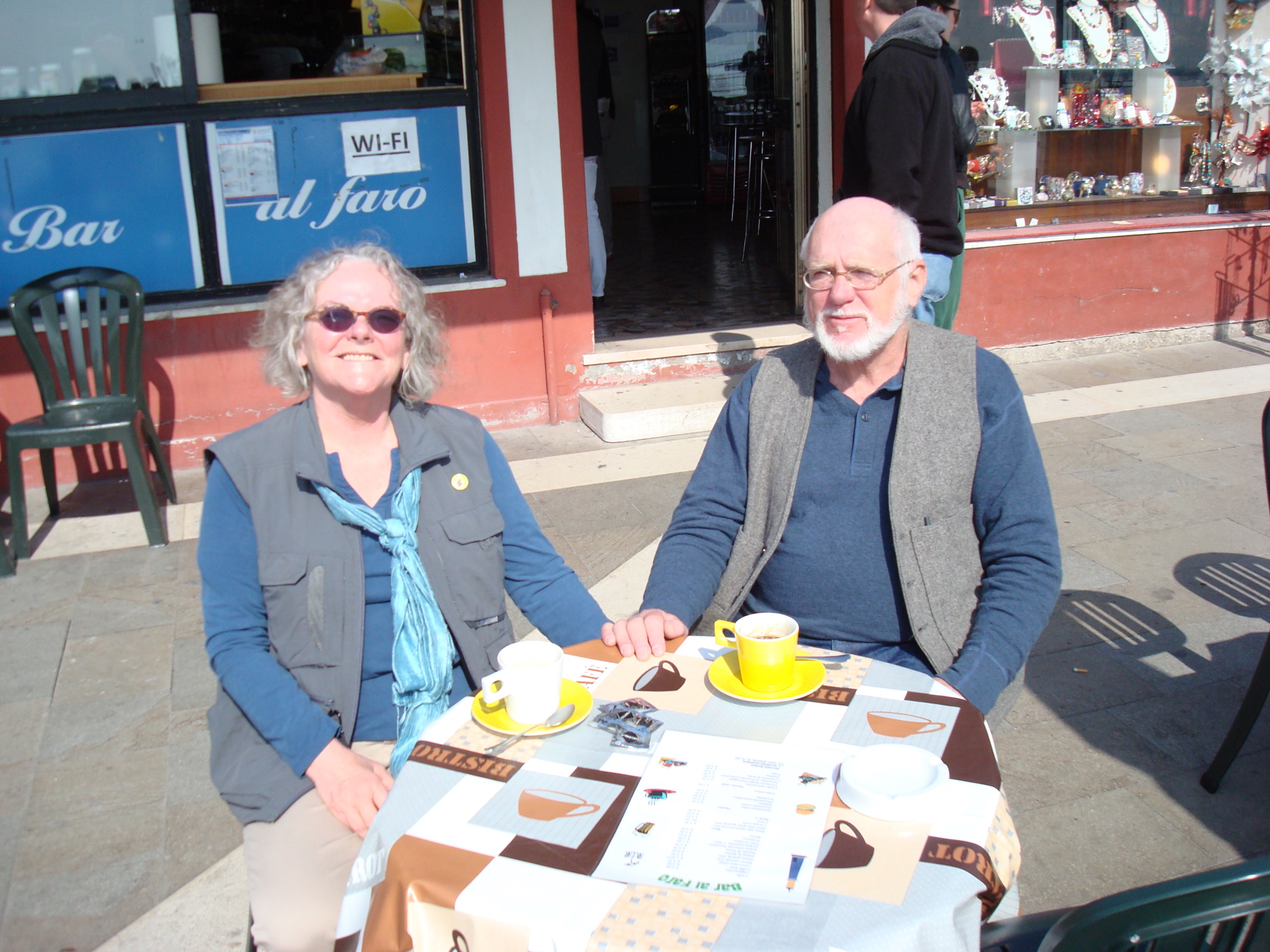
Another sparkling memory, in part because of a picture that captured it, is of having cappuccino in Croatia. We’d planned to spend a couple of weeks in Venice, then altered our plans to include a side trip to Croatia, a country that has been invaded by multiple countries over the centuries. One of the positive side effects is the lasting influence on their cuisine, especially Italian. During our several days in Croatia, we enjoyed many cups of cappuccino for me and coffee for Paul.

Cappuccino and coffee in Croatia, 2012

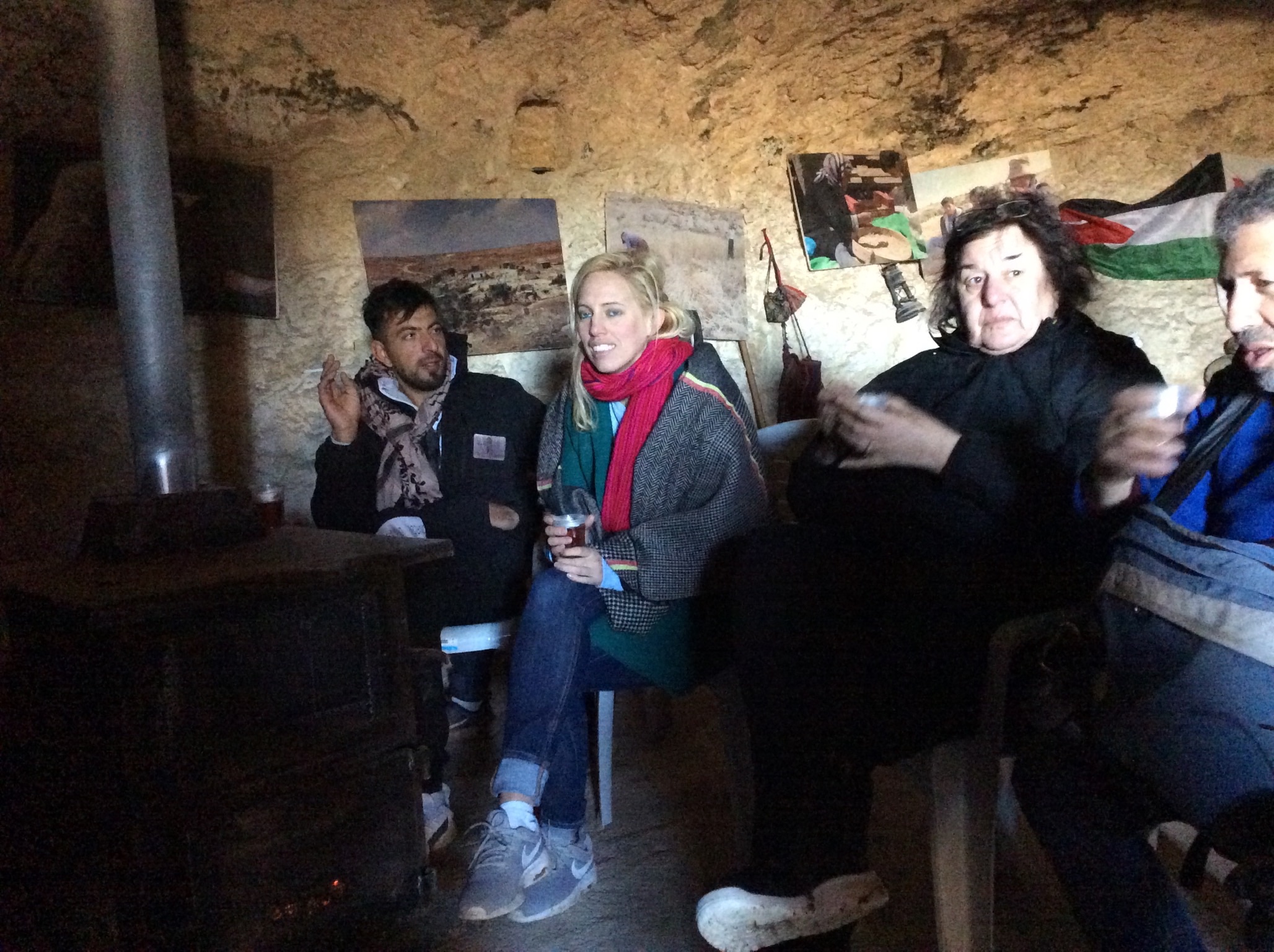
An outstanding memory from my travels in Palestine involves tea, which is frequently served there with either sage or mint, typically with lots of sugar. My special memory is that we were invited into a cave where Bedouins actually lived and were served sage tea in little glasses by the light of their stove. There are so many ways to enjoy coffee and tea, but the ingredient that makes it outstanding is hospitality, whether at home or in a foreign country.

Tea with Bedouins in their cave, 2019

More recently and closer to home, I enjoyed high tea in Salem with a dear friend. I had just heard about a tea shop, Jolie’s, that had moved to a nearby, larger location. They’d added high tea to their menu. I called Fran, one of those friends who I can count on to accept any interesting invitation. She accepted and we planned to visit Jolie’s the next day, where we were served a lovely array of tiny sandwiches, scones, and pastries with two pots of tea. It was a perfect afternoon, made special by a good friend, beautiful food, and delicious tea.

Copyright © 2021

In Transit

If the goal were to write about transportation or being in transit, what should be considered? Well, it could be any kind of transportation, i.e., car, train, plane, boat, or probably even things like sled, skateboard, or wagon. Then, an important consideration would be what might make a particular incidence of transportation memorable, perhaps location or circumstances or emotions. If I had just been one of those recent first non-astronauts aboard the outer-space flight, that would have been my obvious choice, but, unfortunately, I was not, so I must recall something from my past worth repeating to others. I will briefly describe a few memorable instances of being transported, in order of occurrence. Included modes are cars, a roller coaster, a surfboard, a camper, and a boat.

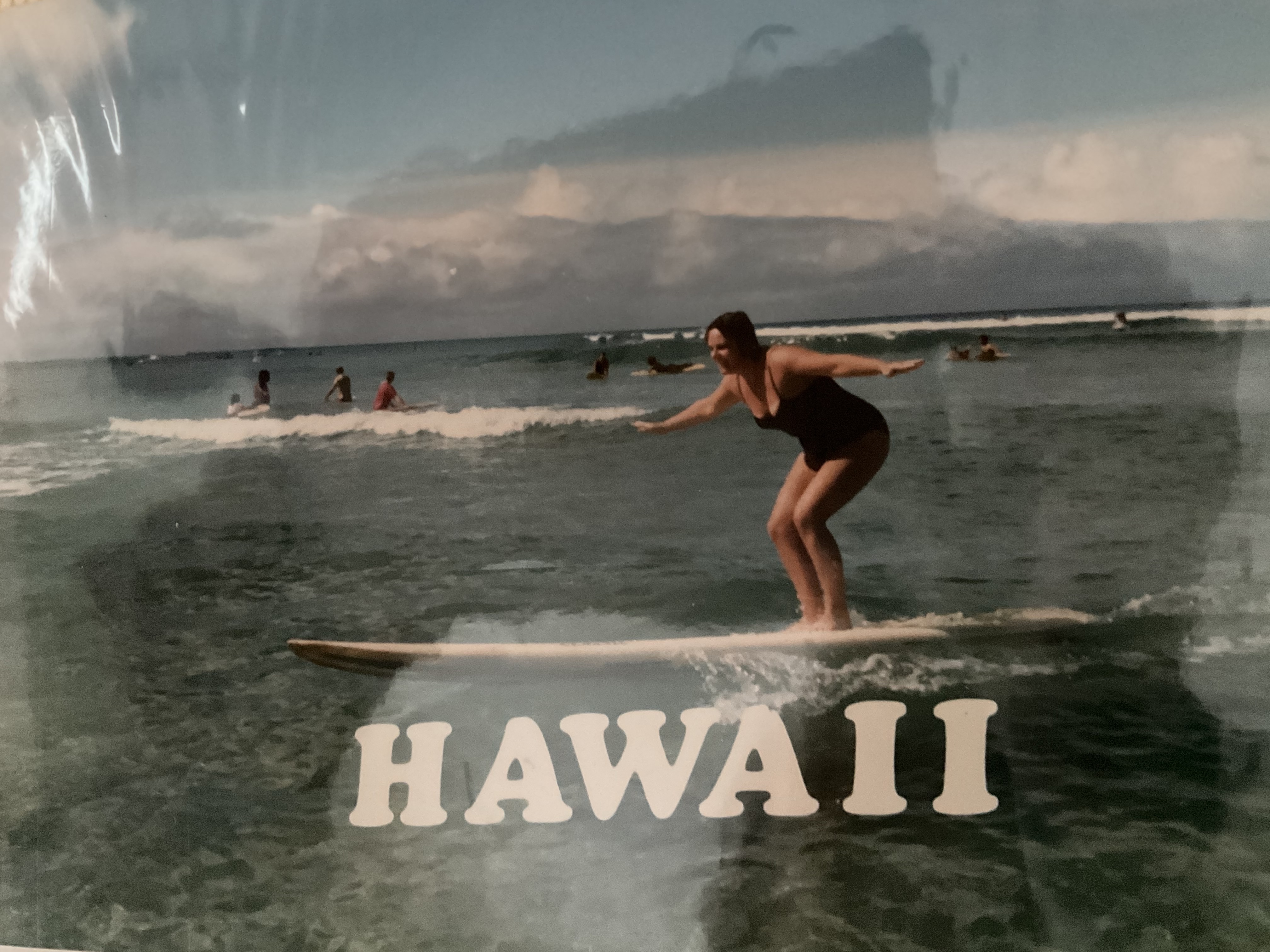
My short ride on a surfboard during the ’80’s

During the 1950’s, the most exciting form of transportation for me was being a passenger in my family’s car as we drove to New Hampshire. The actual most important moment was when the white lines on the road became yellow, signifying that we had entered another state. Wow! How exciting that was! Today, I continue to experience a blip of excitement whenever I see a ‘Welcome to’ another state sign, even when returning to Massachusetts after a foliage expedition.

For at least twenty years, that was my transportation highlight, until 1972, when, sharing driving with three others, we drove nonstop from Massachusetts to Florida in my orange Volkswagen bug to see our guru and to visit Disney World. For about 24 hours straight, we alternated driving, providing snacks and beverages to each other, and sleeping in the back seat. What a thrill that was, even now in my memory, but how comfortable could we have been in that little car? Three of us were in our mid-twenties, while our fourth grey-headed friend, Roz, was about forty, which seemed so old, wise, and mature to the rest of us. A footnote to this adventure is that Roz and I rode a new roller coaster at Disney five or six consecutive times, with screams and great delight.

In the fall of 1973, I began a year of living and traveling in a Winnebago with my husband, our son, and our schnauzer, which included two months in Mexico and about twenty national parks. That was certainly the ride to outdo all others.

In the early 80’s, a ride that was really short, probably less than twenty seconds, deserves to be included here. It occurred on a surfboard during my surfing lesson in Hawaii. Surfing is hard work, mostly paddling out on a surfboard beyond the waves, then attempting timing and balance for the ride back. I was not a natural, but somehow accomplished perfect form for a dozen seconds in about twelve inches of water. I was unaware that a photographer was present, ready to capture us at the perfect moment, until after the lesson ended and we were back on the beach. The picture was a bit pricey, but how could I resist? I have it still!

In approximately 1985, a taxi ride from DC to rural Pennsylvania, where I was living, deserves honorable mention. My lover and I were on a business trip in DC, where we had flown. As I remember this, it’s interesting to me how some details remain vivid, while others fade. I don’t remember why, but our flight home was cancelled and it was important that we return without delay for other business matters. So, we took a taxi and, during that 4-5 hour ride, enjoyed sex in the back seat, modestly covered by our coats and apparently ignored by our driver.

Despite the thrill of that ride, certainly the winner of my experiences in transit must be my sail across the Atlantic. With my husband and two friends in their 43-foot cutter, we set sail on June 13, 1995, arriving at our destination in the Azores on July 7. More than three weeks at sea and a lifetime’s worth of adventure, fear, amazement, boredom, and exhaustion, ‘out for a sail’ can’t begin to describe that experience.

Many modes of transportation and many emotions! Although I have flown extensively, for both business and pleasure, usually with enjoyment, I’ve not chosen any of those trips to include here. Ah, but there was that one flight . . .

Copyright © 2021 Carole Rein

An Article of Clothing

I’ve owned so many different articles of clothing. Some were highly significant, such as my two wedding dresses, each cherished, while others were valued, though not particularly significant, such as my favorite, most comfortable underwear. I want to share the description of an article of clothing that I never owned, but that represented something priceless to me. It was the uniform that I wore in the 60’s as a member of the color guard of St. Mary’s Cardinals Drum and Bugle Corps.

The uniform was a long-sleeved, knee-length dress, with a cream colored bodice, a maroon skirt, and a shiny gold cummerbund. With it, we wore a helmet with a feathery plume, white cotton gloves, and white leather mid-calf boots, which we polished before competitions or parades.

How did I come to join this organization? At church one Sunday at Mass, an announcement was made about upcoming tryouts for girls for the color guard. I didn’t even know what a color guard was! Nevertheless, I decided to try out. Tryouts were to be held at St. Mary’s parochial school, around the corner from the church. As I entered the parking lot where tryouts were to take place, the corps had just put on their uniforms, in preparation for an event. It was the first time I had ever seen them. The gold cummerbunds were shining in the bright sun, as were the bugles, the horns — I was dazzled by the sight and determined to succeed in being chosen to be one of the people wearing the striking uniforms. I wanted to shine in the sun, too!

At tryouts, which took place during several sessions, we learned to march, to stand straight, to ‘stick them out,’ and to respond to commands: about face, mark time, march, parade rest, and more. We learned how to line up in perfectly straight lines and to march in unison. After several sessions, selections were made and I learned that I was chosen! I was to be in the color guard, carrying a flag. Only the guys played the horns.

After tryouts ended, we began to learn the color guard routines to recorded music, while the guys practiced their music endlessly. We practiced our own routines about five nights each week, then began to practice with the rest of the corps, with their music.

All I could think of was that I would wear one of those beautiful uniforms! When the day finally came to try them on, I was deliriously happy. We didn’t get to take them home, but left them at the school. Before the first competition, we were instructed to purchase our own boots and gloves.

During the year, we competed in local and national competitions, plus marched in every local parade. Our corps was considered one of the top ten in the country. I never tired of wearing that uniform or of marching to the glorious music of the drums and horns. Some of the tunes we marched to were Begin the Beguin, Mr. Wonderful, and We’re Having a Heat Wave. Because we rehearsed or competed almost every night of the week, we got to know each other well. So well, in fact, that one of the drummers became my first husband!

Interestingly, I just received a call announcing the death of a good friend of my ex, one of the other drummers. I haven’t seen him for years, yet that long-ago closeness left me feeling sadness at his passing. That uniform that I wore represents a special time in my life, when most of my life awaited me. It also represents the first time I was conscious of taking a risk, trying something new and different, and experiencing success and more than success, a joyful excitement that I feel now, just remembering that time.

Copyright © 2021 Carole Rein

The Family Secret

It’s strange that I am unclear when I actually learned about this secret. I know it was after my parents’ 25th anniversary party, which I orchestrated nearly fifty years ago. It was a wonderful surprise gathering at the Surf in Magnolia, with a full dinner and a live band for dancing. I had invited my parents’ friends and relatives, plus associates and staff from the Boston business my dad had sold eight years earlier. I was pleased with myself for tracking down all the people I remembered so well, except for my father’s former secretary, Hazel.

Some time after the party, I heard the secret twice, first from one of my dad’s business pal, Julian, then from my mother. My dad had had an affair with Hazel; that’s why no one would give me her contact information when I asked for it.

Here’s what I remember about Hazel. Interestingly, I have this strong memory of my father, who I adored, telling me that I had beautiful eyes and that they were hazel, not blue. At the time, I made no association with Hazel, his secretary, who I really liked. Once in a while, he would take me into his office for the day and she would sometimes join us for lunch. It always felt special. I remember one day having lunch where my spectacular fruit salad was served in a cocktail glass on a doily on a large plate.

I also remember spending the night once at Hazel’s, too young to think anything of it, and returning home the next day to rave to my mother about how much fun it was and that Hazel used placemats, which I thought was quite elegant. Now, remembering this, I can only imagine how hurtful that was to my mother.

I don’t remember the circumstances under which my mom told me about Dad’s affair, but here’s what I do remember. My dad prided himself on his honesty, so one day, he told my mother that he was in love with someone else and that he was willing to get a divorce. And that she – Hazel – would take the children, the three of us under ten years old. My mother told me that there was no way she would let us go, though evidently she would have had no qualms about losing my dad. In my memory, my mother was much more horrified that Dad would take us away from her than that he was in love with another woman.

I don’t remember other details that she might have provided, but she told me Dad decided to end the affair, but was unable to do it without ending his business. So, when I was in high school, he sold his successful business, Acorn Films, and completely changed his profession, ultimately becoming a city assessor, first in Beverly, then in Burlington.

Having an affair is not an unusual story. I suspect that what may be unusual is ending an affair because the wife wouldn’t give up her children and, additionally, the husband wouldn’t leave them behind.

Copyright © 2021

Six Hours, One Protest

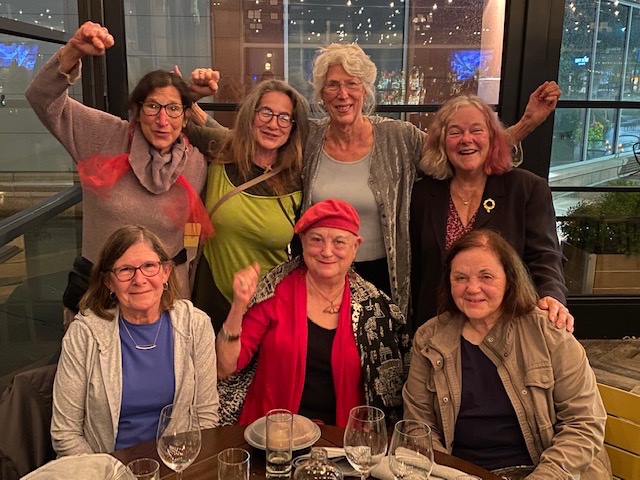
Dinner with six dear sister protesters, two days later

In one sense, this was just another protest, one of many in which I have participated. But, the protest Sunday in Bow, NH, was different for me. Let me describe it.

First of all, two years ago, this was where I was arrested. Well, not exactly here, but across the street at the coal-powered plant, not at the ball field. The day I was arrested, we’d started the protest at the ball field with a rally for the hundreds of people who were in support of our cause (closing the final coal-powered plant in New England), but who did not want to get arrested. Then, the dozens of us willing to put ourselves at risk of arrest, all dressed in white Tyvek suits and carrying large white buckets, left the field, walked across the street to the gated plant entrance, singing and chanting, “We do what must be done!”

This time, as two years ago, those deeply involved had spent the weekend camping nearby, getting to know each other better, making new friends, participating in non-violence training, and preparing themselves mentally and emotionally for this action. I hadn’t been among them this time, recognizing my more recent physical and emotional limits. I had arrived at noon for this single part of the weekend, the protest rally.

I’d driven the seventy miles from home, arriving just before noon. As I approached the location, state police cars were posted about every quarter mile for a mile and a half. This was along a quiet road, not the highway. When I saw the first one, I slowed down to thirty miles an hour, not wanting to give the police any reason to stop me. Also, my heart moved into my throat, remembering that, still out on bail until my trial next year, I had been alerted by my attorney that police would be looking for any of us who had been previously arrested.

One of the conditions of my bail was to not be within 500 feet of the plant. Driving past it and the parked police cars on my way to the ball field made my heart race. There were new “No Parking” signs placed along the road approaching and beyond the field. Although our organizers had secured a permit to rally at the field, clearly the police were setting up obstacles and were not going to make it easy for us. About a quarter mile beyond the field, was a section without signs, so I parked there and walked back to the field, hoping my car would not be towed.

Arriving, my fear lifted as I saw fellow protester friends from Massachusetts, Rob, Jim, Amanda, and Carolyn; and others from Maine and Vermont, some of whom I had not seen in person since I was released from jail, the day of my arrest. Additionally, there were many more young people present than I remembered from previous events. The speakers were each wonderful. Included among them were some of the leaders I had worked with before, plus some local residents who had been called to join us after learning of the dangers to their health and to the Merrimac River, located directly behind the plant.

Other protesters planned to follow up this part of our gathering by canoeing and kayaking in the river. That morning, police had told our leaders that we would not be allowed to use the public entrance to the river. Fortunately, they were able to make other arrangements, and were successful.

One of dozens of kayakers

Some local Bow speakers impressed me the most, including a young mom, present with her three children, one of them in her dad’s arms. Another speaker made me cry with her words. She was nineteen, a college student. She described being present two years ago, being advised, because of her age, that she should not risk being arrested, and watching with admiration as those of us in our white Tyvek suits marched, chanting, to the gates, ready to trespass and be arrested. She described her frustration, because she wanted to be more involved. Now, she planned to be totally involved, inspired by us from two years past, saying, “What kind of a future will there be for me if our planet is destroyed?”

This time we sang a new song, “They’ve tried to bury us, but they didn’t know we were seeds.”

I was gone for only six hours and came home with a new NoCoalNoGas tee shirt, reading, “Do what must be done.” I was not arrested; I saw the seeds growing and drove home with satisfaction.

Copyright © 2021